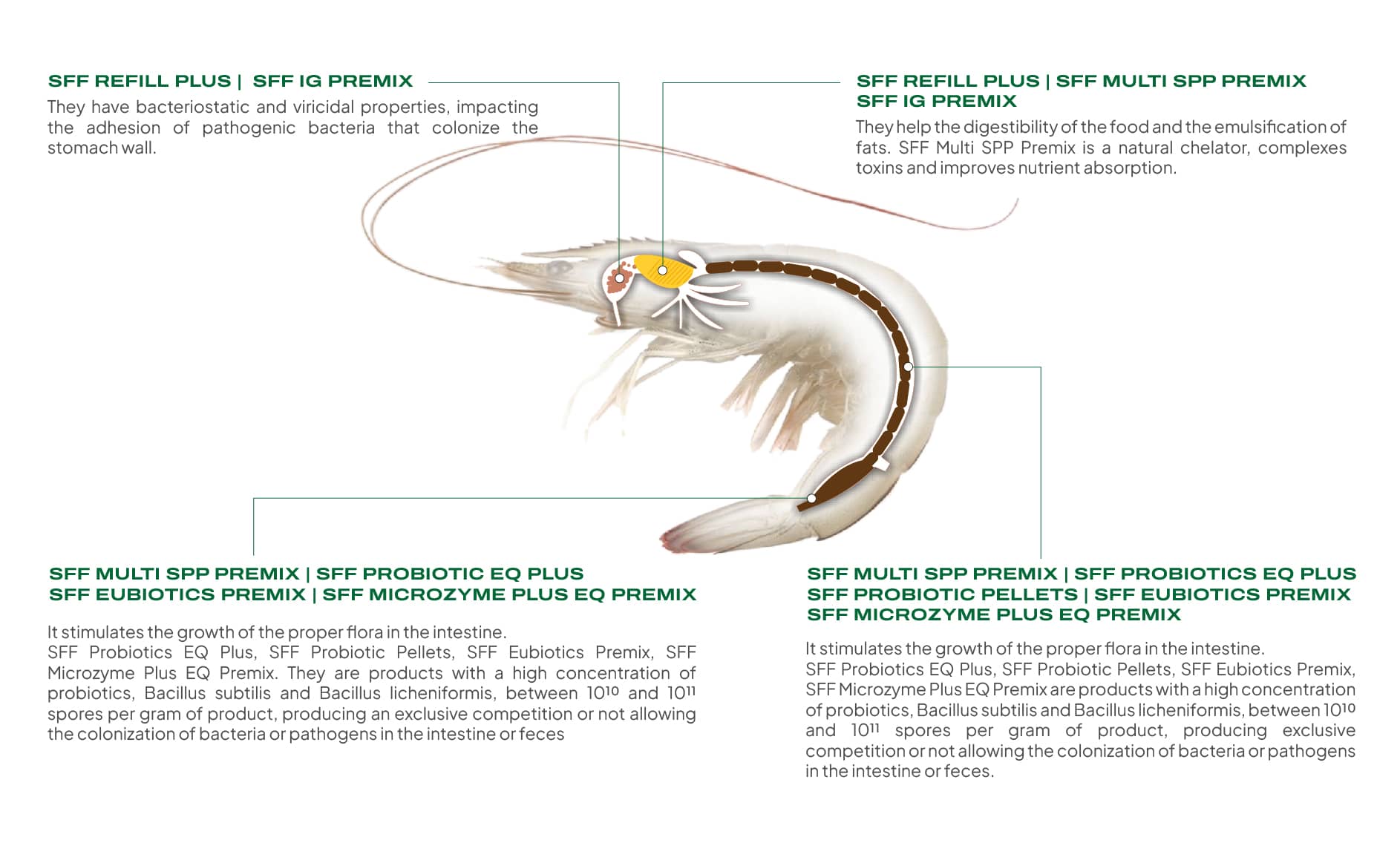
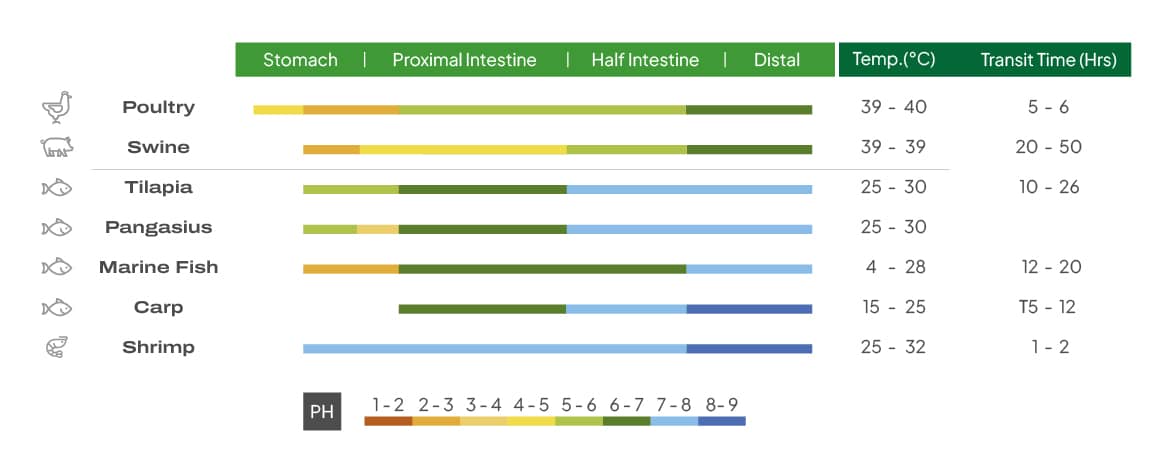
The digestive system of penaeid shrimp is divided into three main parts: the foregut, the midgut, and the hindgut. The foregut is composed of the esophagus and stomach, while the midgut includes the hepatopancreas and a nearly straight section ending in the anus. The stomach is made up of two chambers: the anterior chamber (ASC) and the posterior chamber (PSC). This structure functions as a selective filter, retaining large particles of partially digested food, allowing smaller particles and soluble materials to pass into the hepatopancreatic ducts. From there, these materials reach the hepatopancreas, where further digestion and nutrient absorption take place.
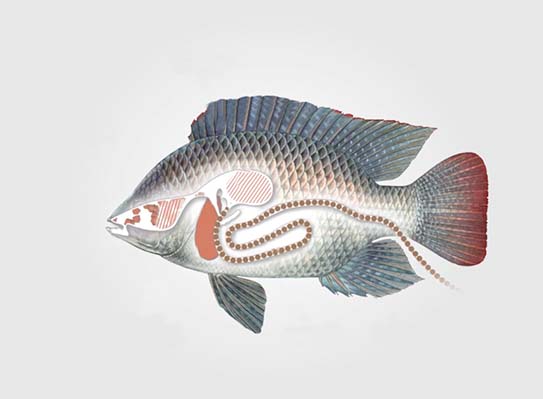
The digestive system of fish is divided into three main parts: the mouth, the intestine, and the hindgut. The mouth is adapted to capture and, in some cases, grind food. From there, the food passes into the esophagus, which leads to the stomach. The stomach can vary depending on the species, but it is generally a sac where initial digestion takes place through the action of enzymes and acids. Partially digested food then advances to the intestine, which is a generally elongated and coiled tube, also home to associated organs such as the pancreas and liver. The intestine functions to absorb nutrients, while the liver and pancreas secrete digestive enzymes and bile that facilitate the breakdown and assimilation of food. Finally, waste is expelled through the anus.
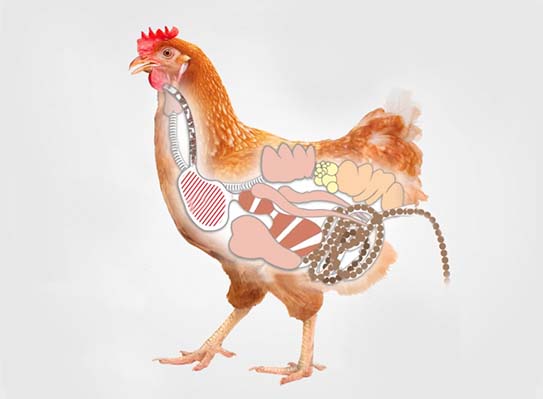
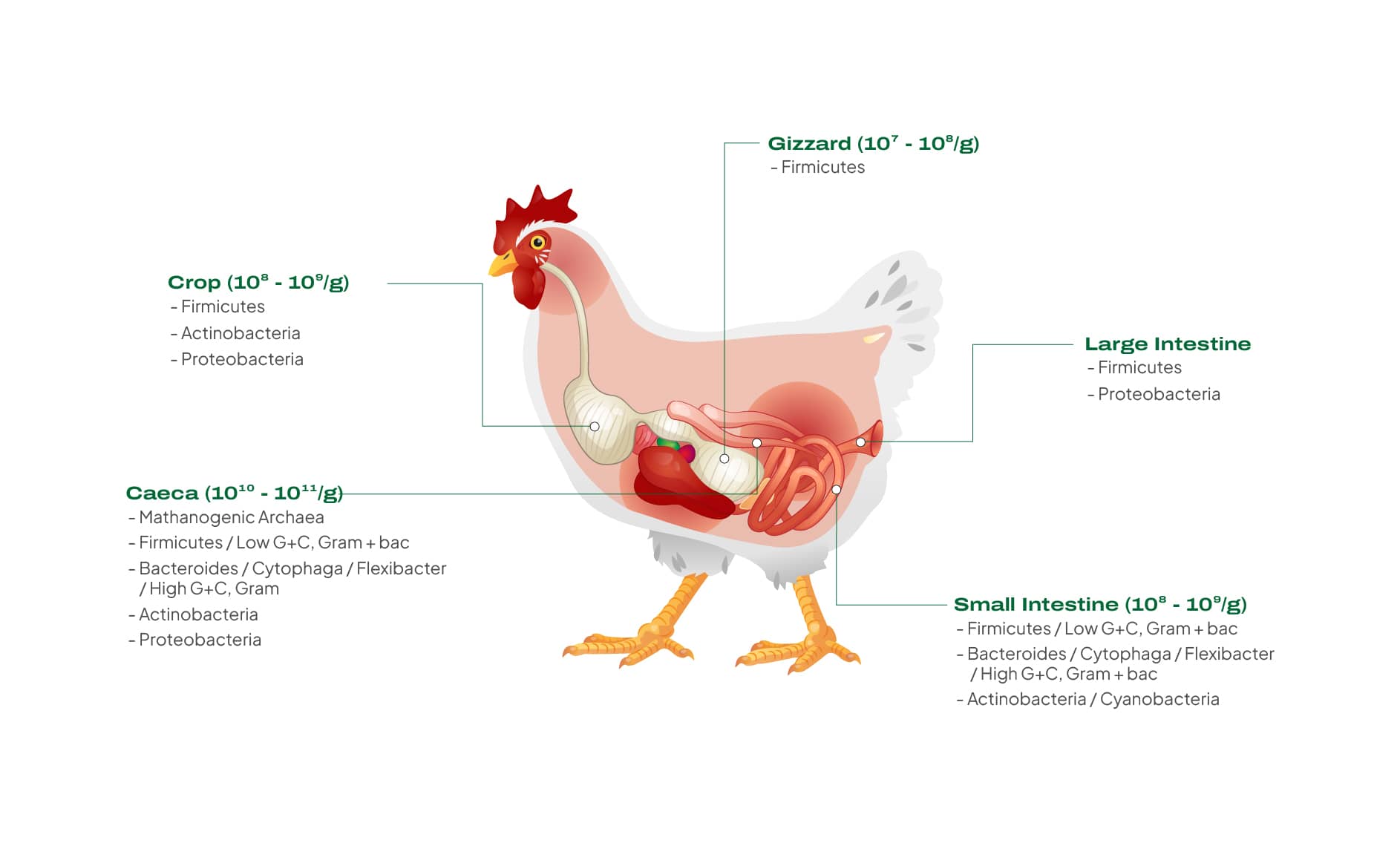
The digestive system of birds begins in the beak or mouth, the shape of which varies depending on their diet. It includes salivary glands, esophagus, pharynx, liver, crop, stomach (proventriculus and gizzard), small and large intestine, ceca, and cloaca.
Digestion begins with ingestion of food, where saliva contains enzymes such as amylase that begin to break it down. The food then passes into the crop, where it is temporarily stored for slow digestion. It then reaches the proventriculus, where it is softened by acids and digestive juices, and then the gizzard, which physically grinds the food.
Finally, the food passes into the small intestine, where the liver and pancreas collaborate in digestion and absorption of nutrients, and then to the large intestine for waste elimination.
Effect of functional ingredients
Type of bacteria and concentration in each section or organ of the birds
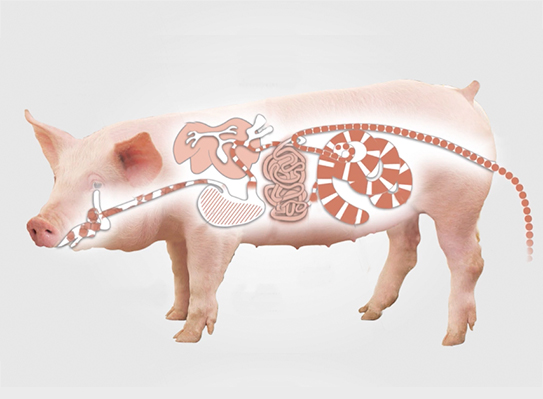
The pig’s digestive system is divided into three main parts: the anterior tract, the middle tract, and the posterior tract. The anterior tract is composed of the mouth, where food is ground by the teeth, and the esophagus, which carries food to the stomach. The pig’s stomach is a muscular organ that performs chemical digestion through the action of enzymes and acids, breaking down food into smaller particles. The middle tract consists of the small intestine, where most digestion and nutrient absorption take place, assisted by enzymes produced in the pancreas and bile secreted by the liver. Finally, the posterior tract corresponds to the large intestine, where some waste is fermented and water is absorbed before the waste is eliminated through the anus.
Agriculture is the process of food production and is currently in constant evolution to adapt to practices that increase global productivity. Its impact is fundamental, as it ensures that fruits arrive in optimal condition for consumption. If cultivation and harvesting processes are not properly implemented, deficiencies in the micro- and macronutrients that the fruit should naturally contain can occur. Therefore, the physical and chemical characteristics of the product are key to its acceptance and quality.